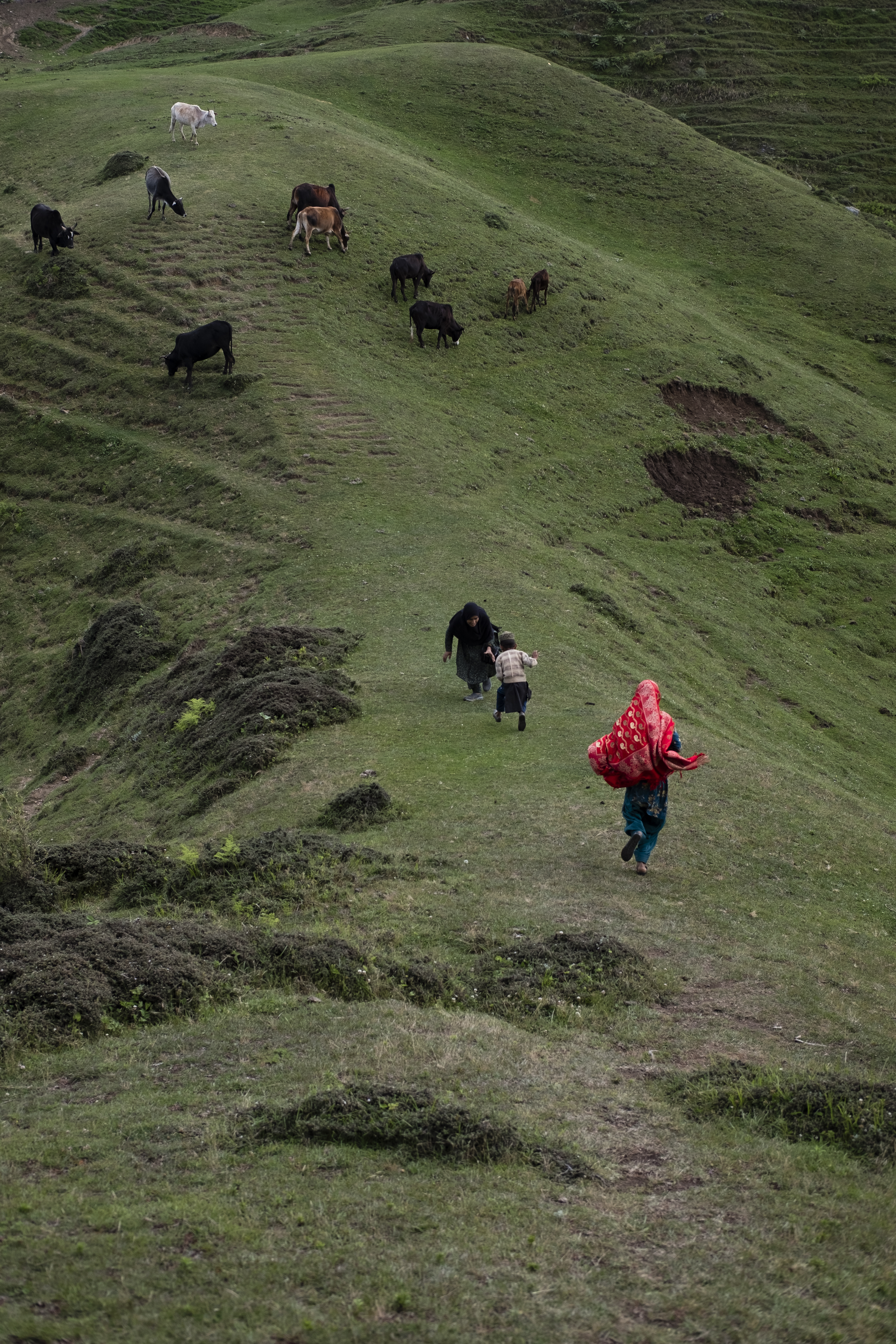
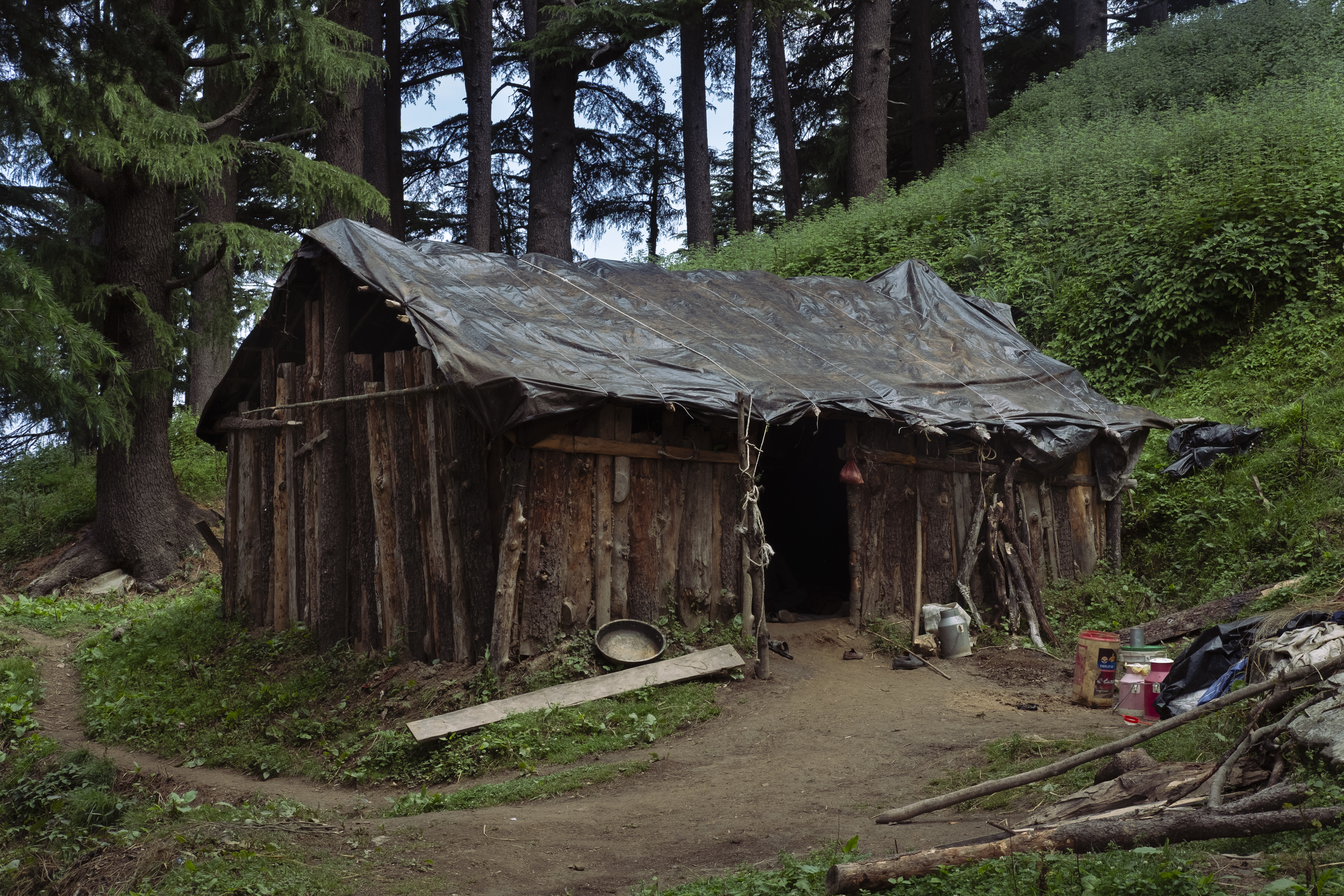
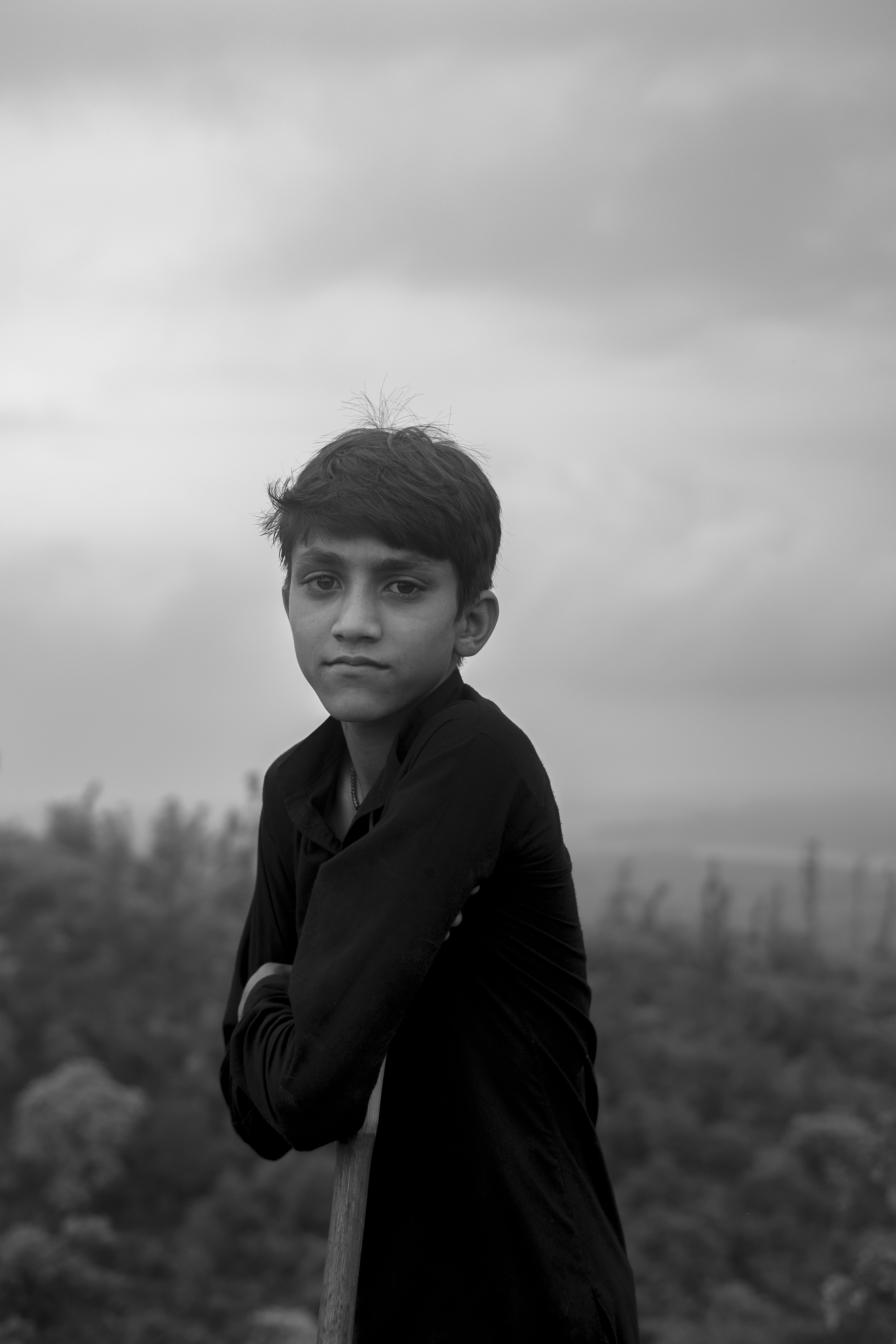
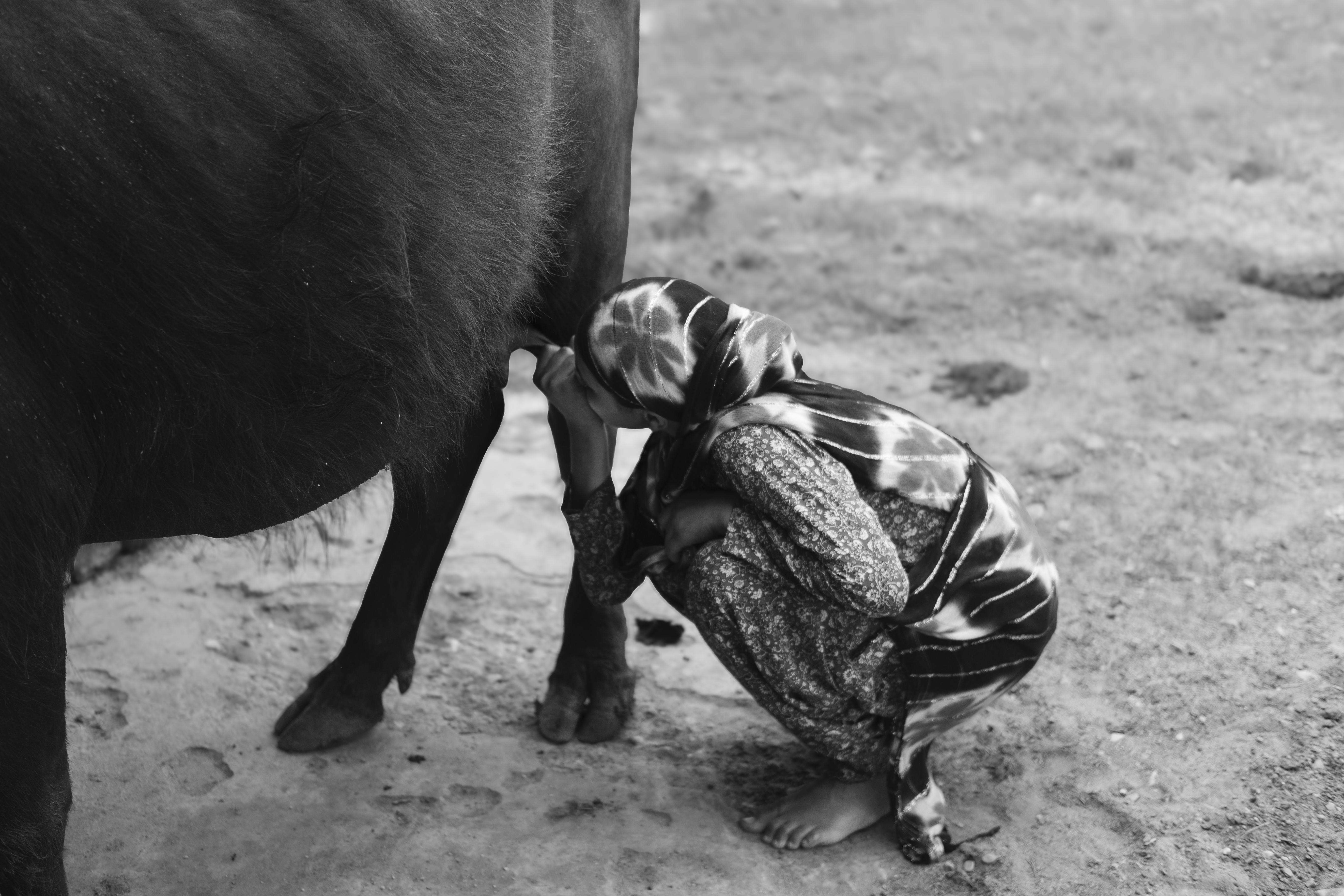
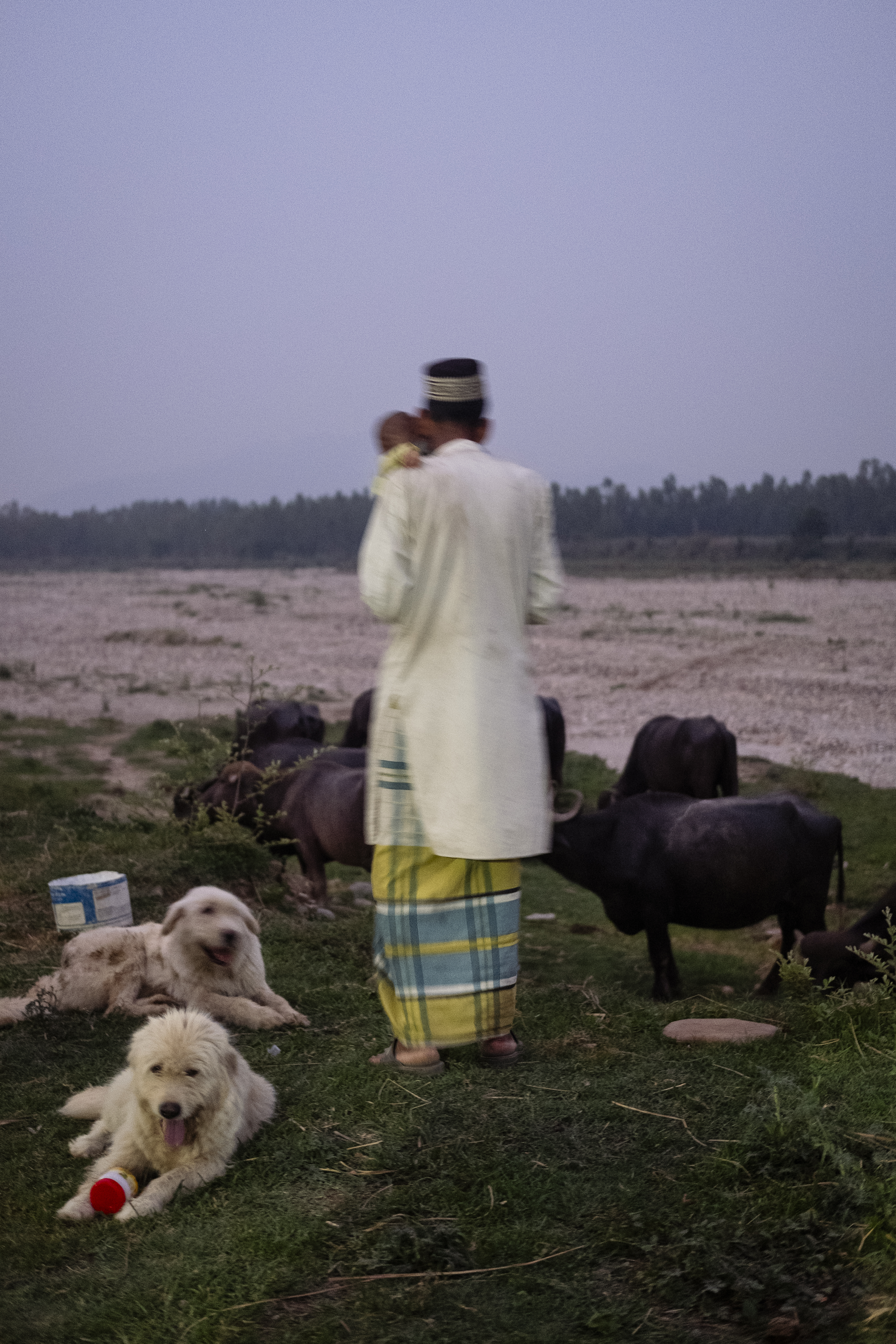
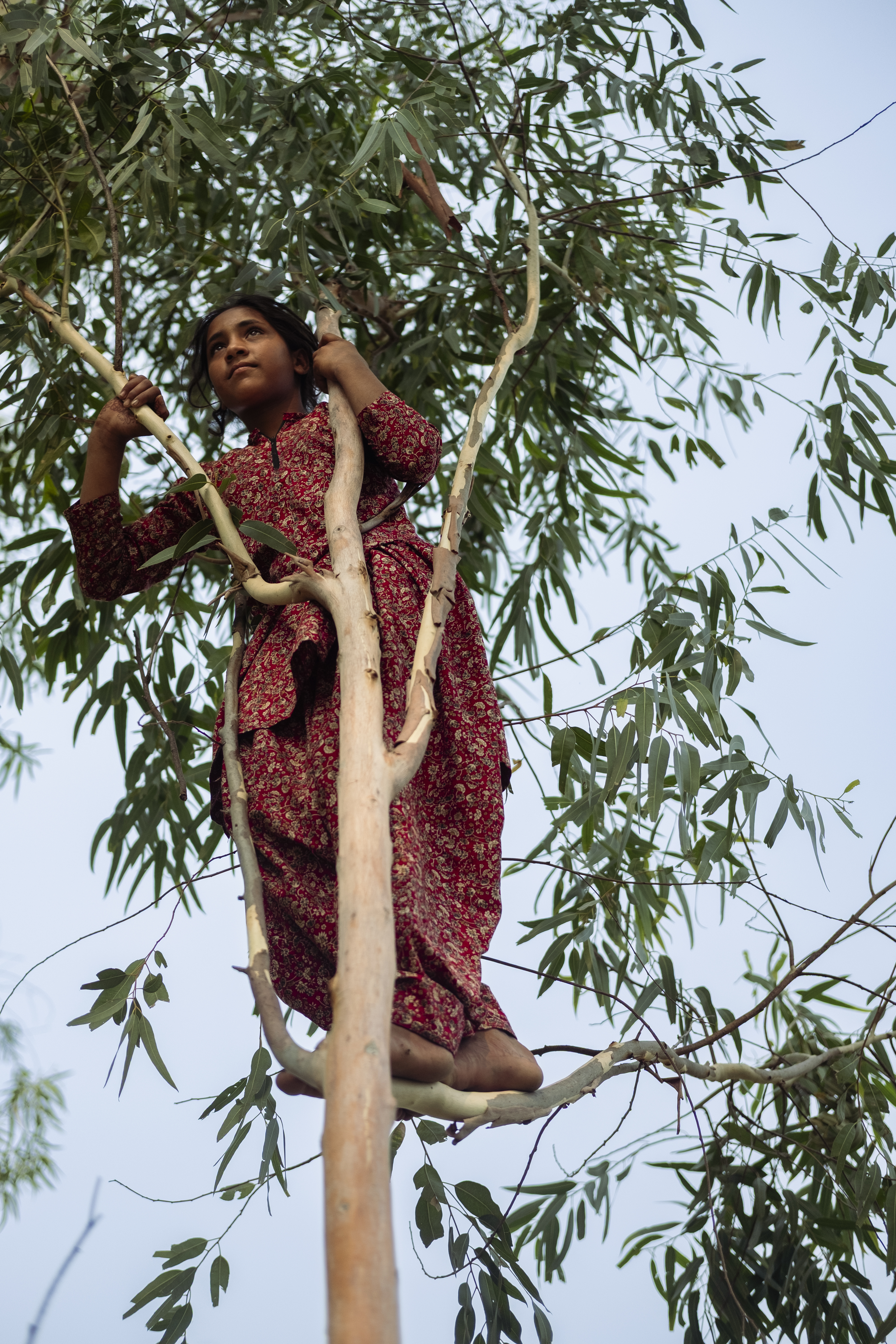
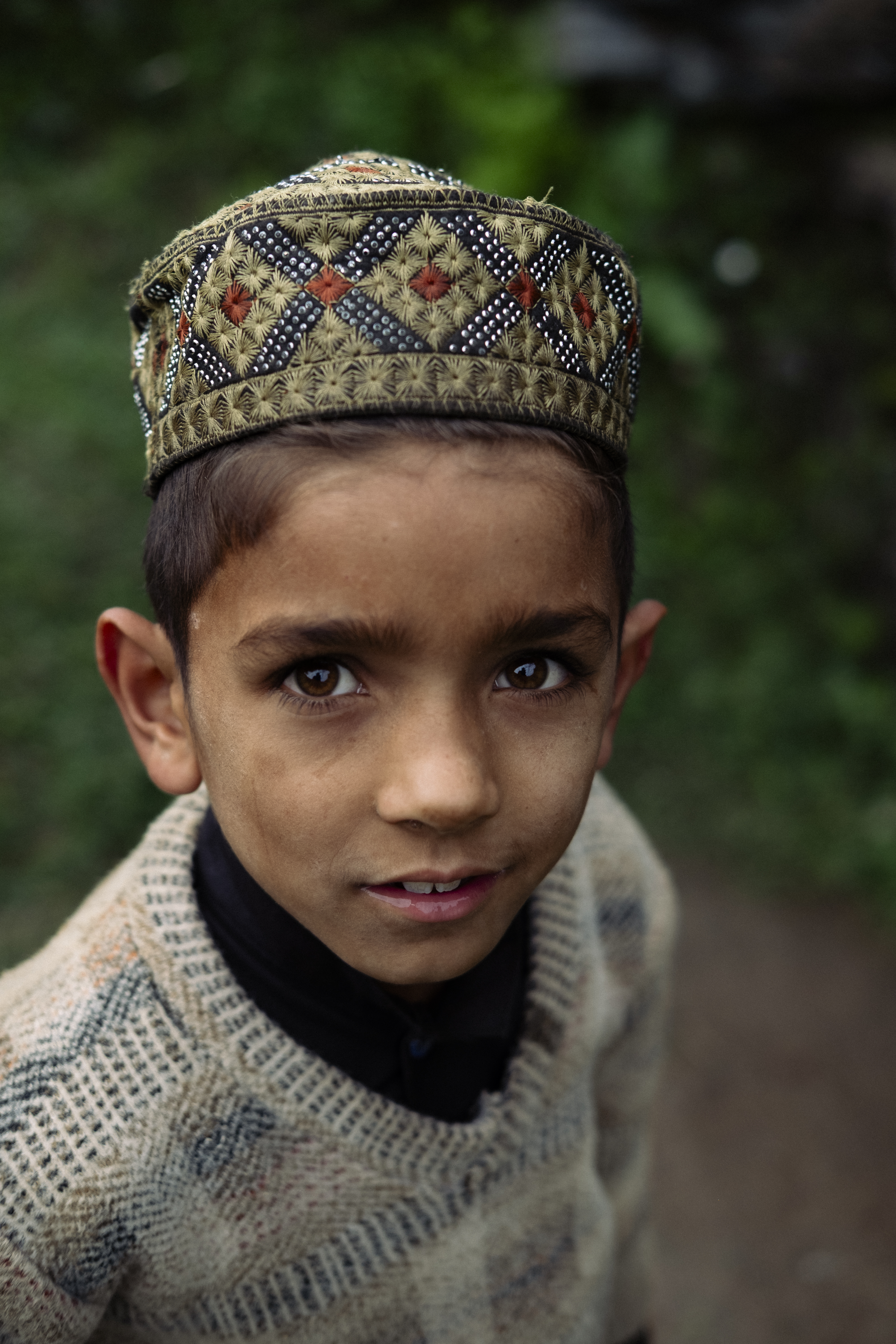
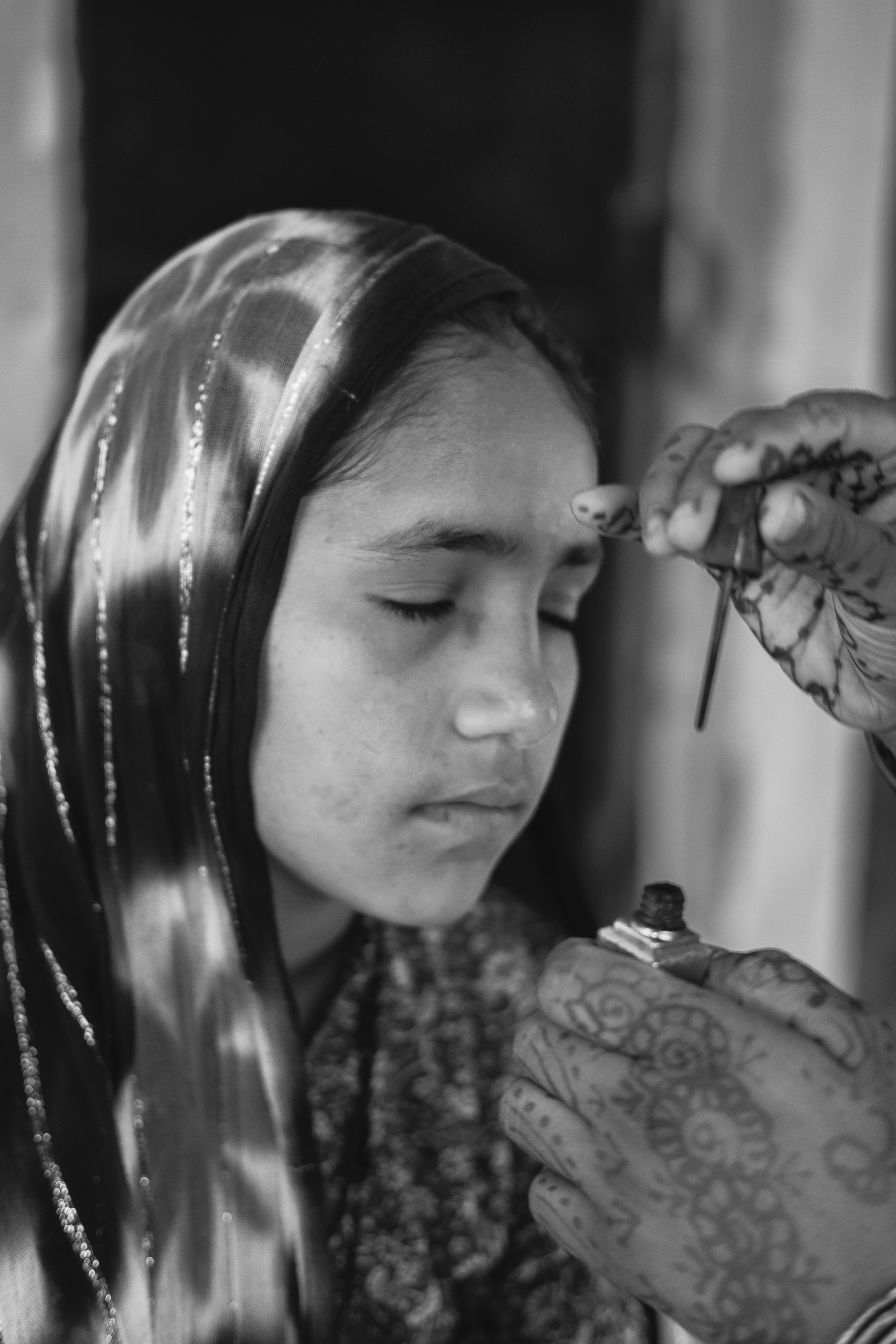
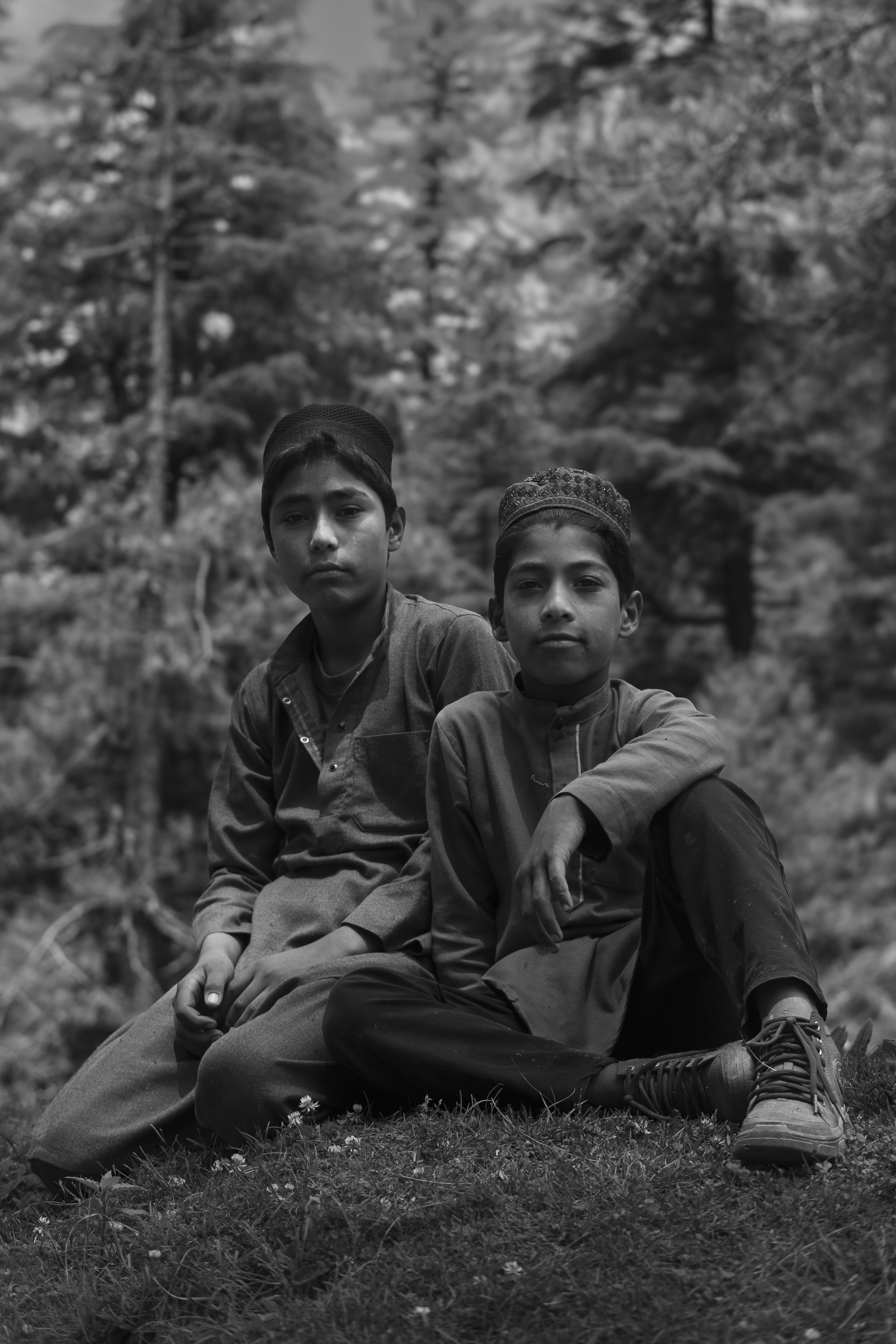
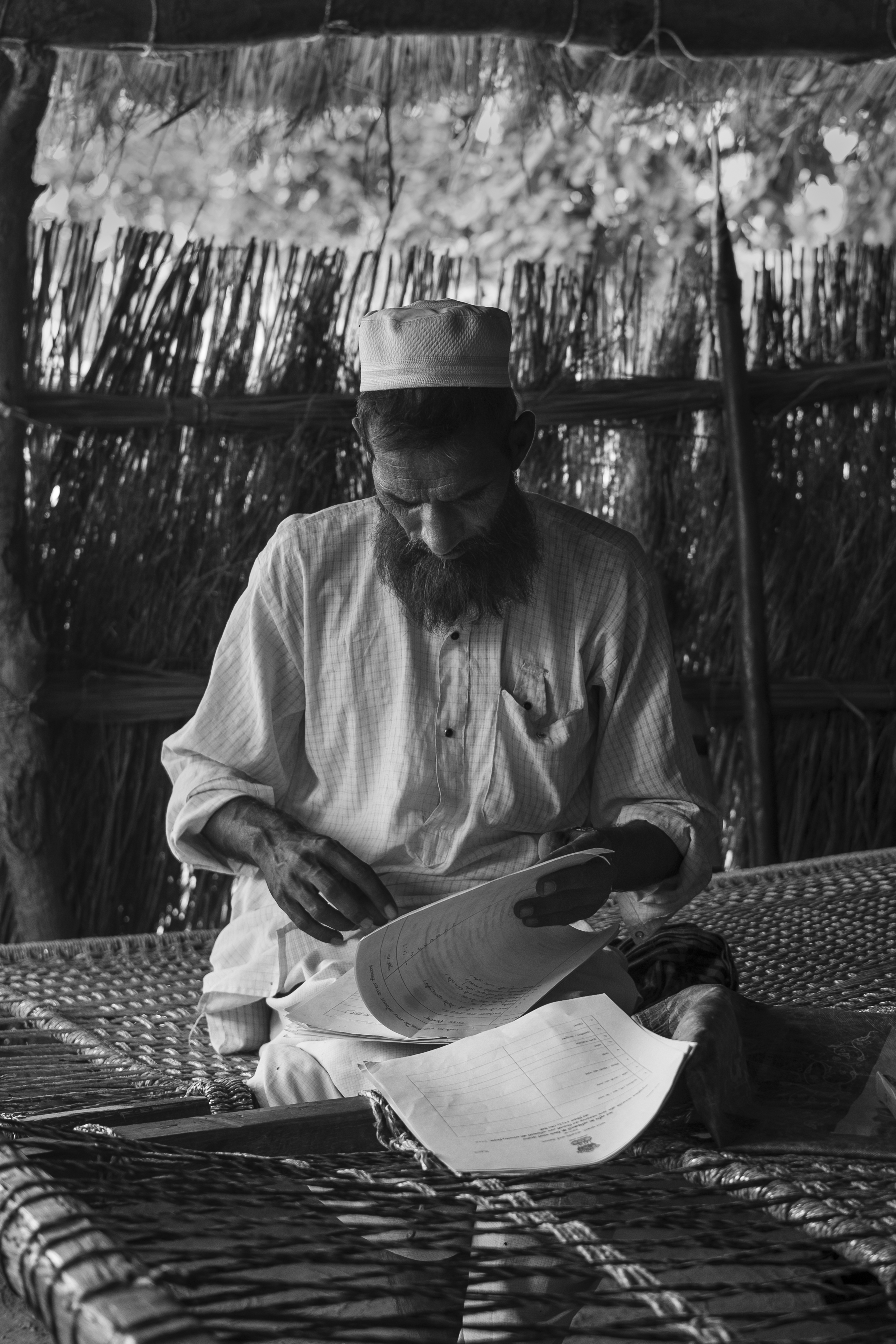
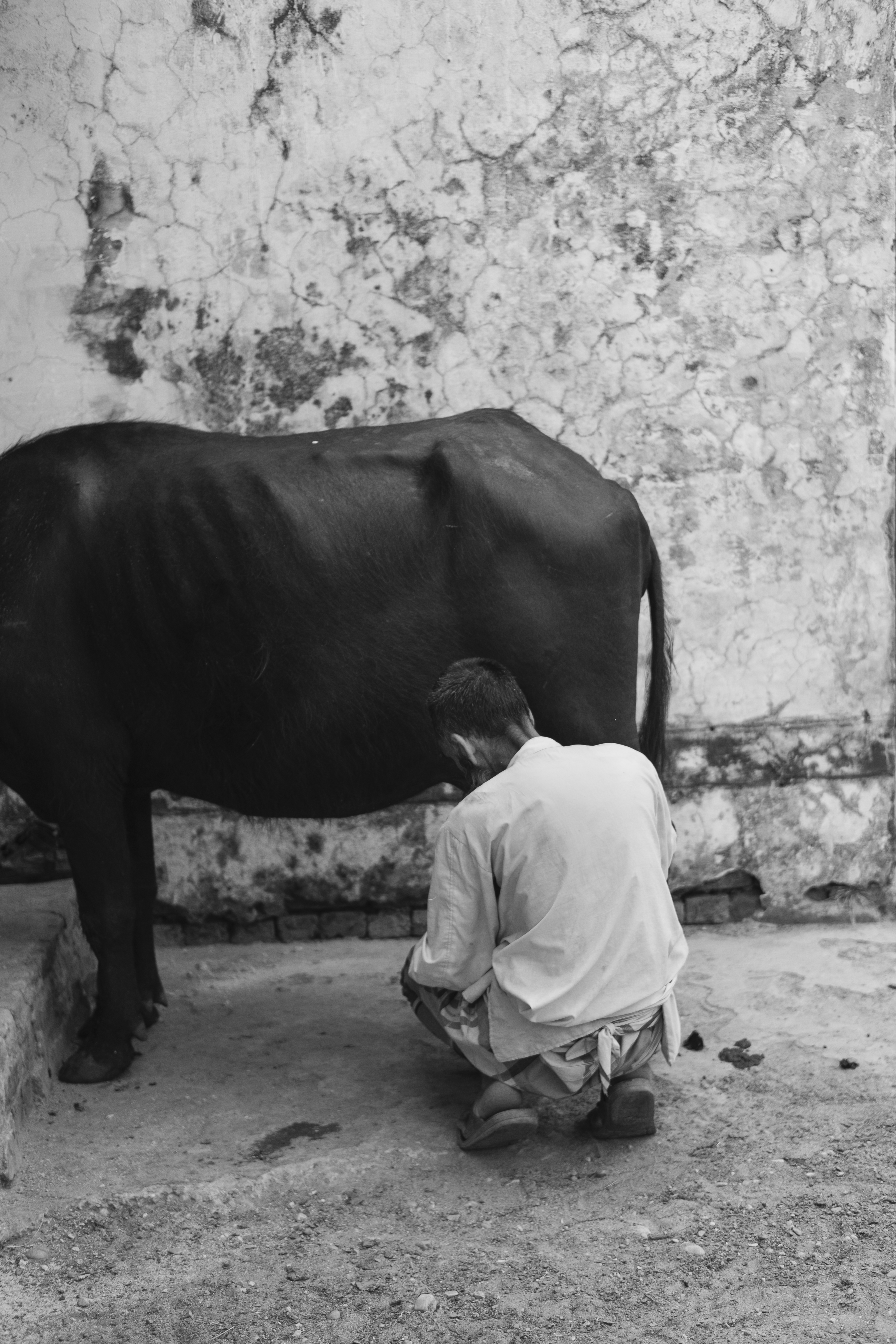
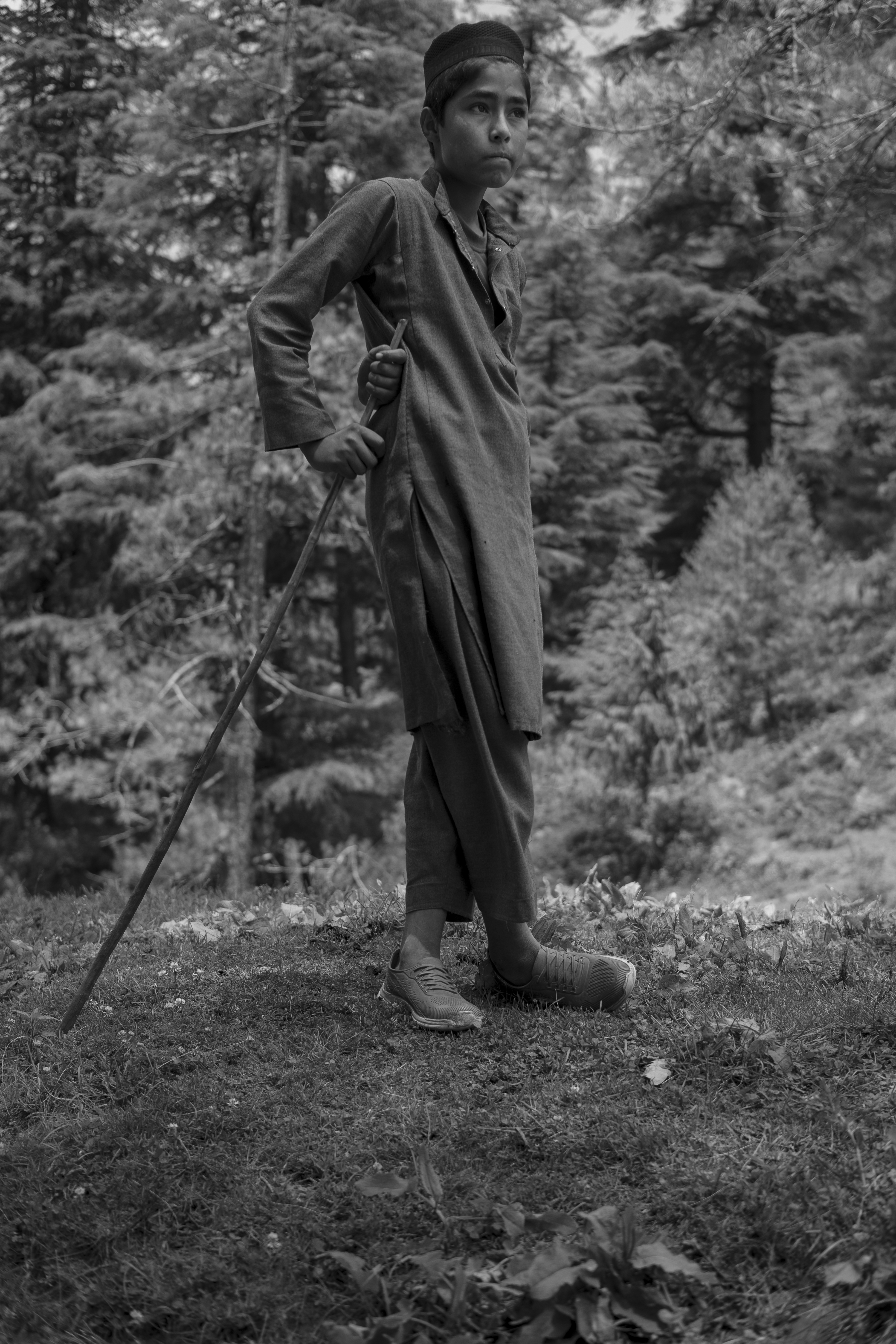
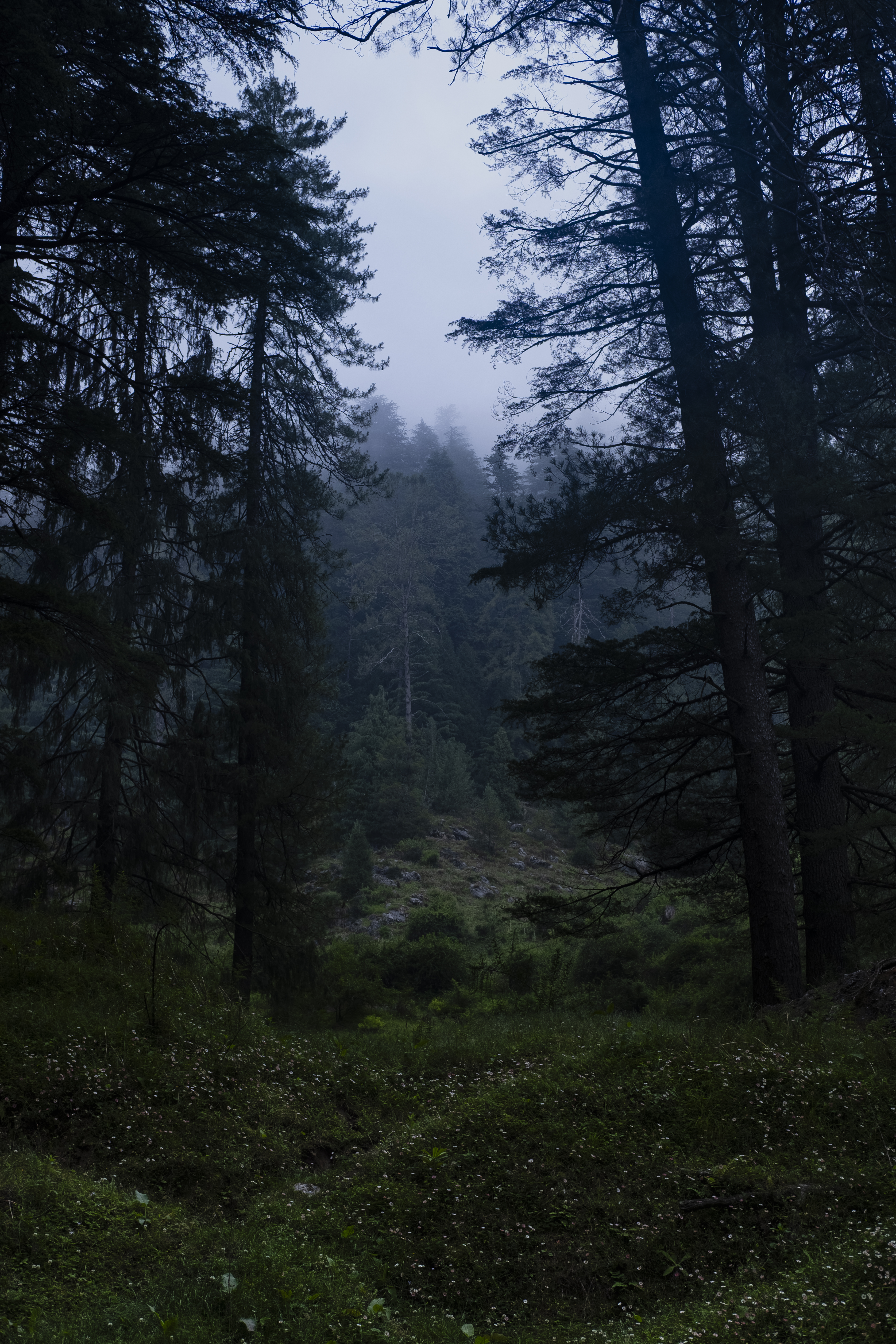
In 2025, I worked briefly with the NGO The Society for Promotion of Himalayan Indigenous Activities, which led to an initial introduction to Van Gujjar families in forested regions of Uttarakhand and Uttar Pradesh. I remained in the forest for the rest of the summer, living with the families of Ambu and Safoora in the jagged seasonal riverine terrain of Uttar Pradesh, and Hasina near the alpine meadows higher up in Uttarakhand. The Van Gujjars distinguish themselves from the larger and internally diverse Gujjar communities of North India as Gujjars of the forest. They reside in temporarily erected huts built from forest materials, practice transhumant pastoralism through the herding of an indigenous breed of water buffalo, and speak a language that combines elements of Punjabi, Urdu, Dogri, and Pahadi.
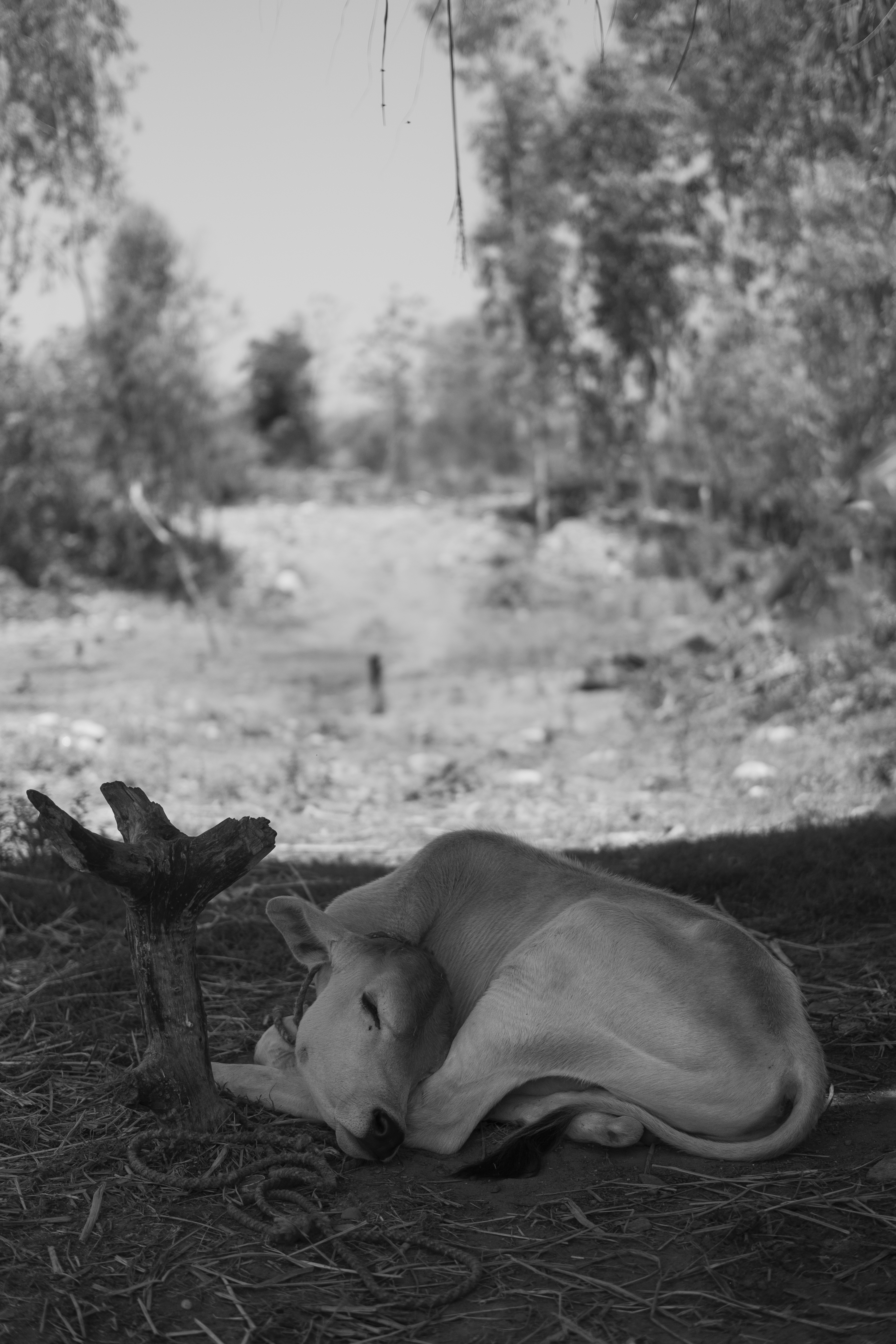
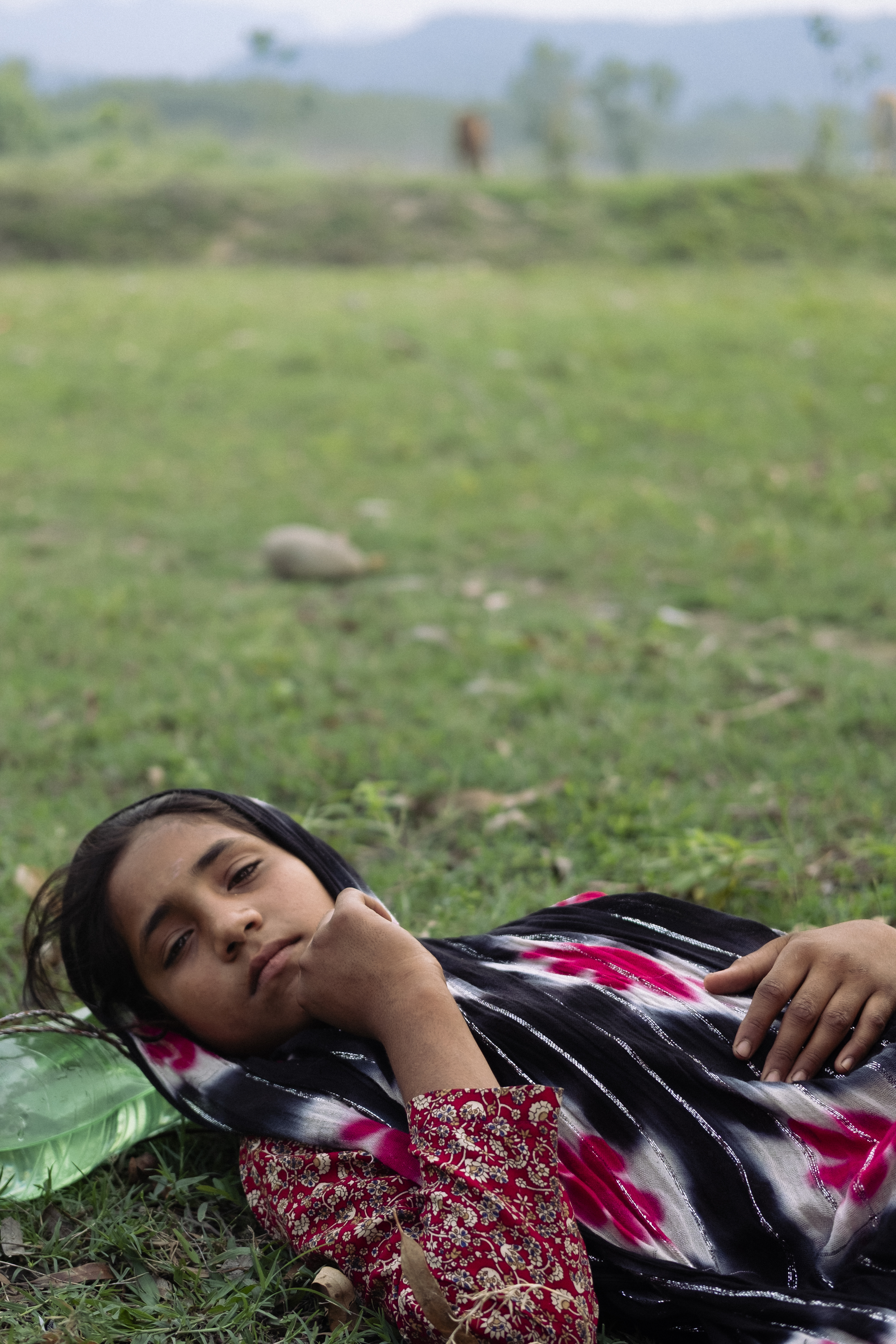
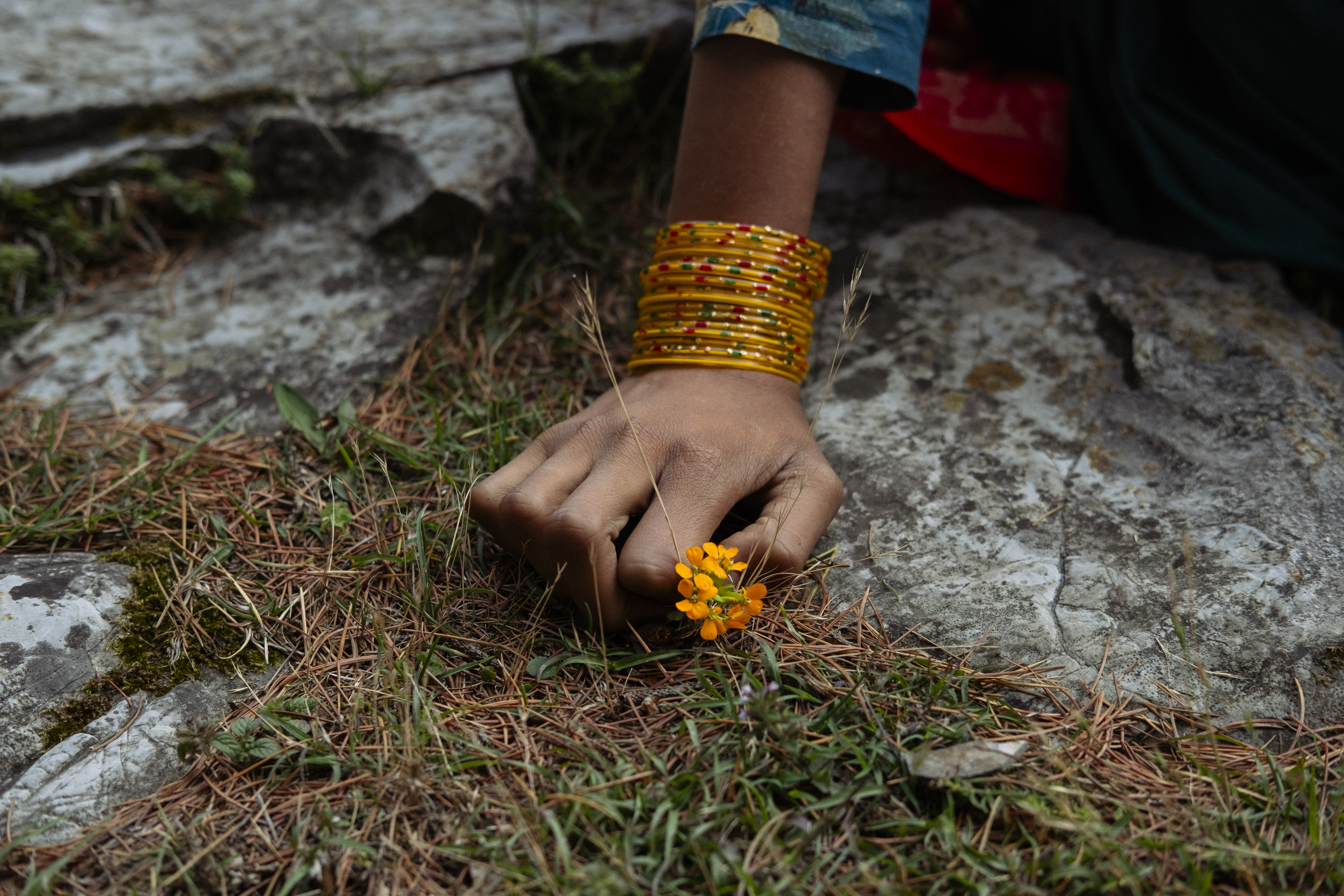
We walked along dried riverbeds while taking the buffalo herd to graze. The buffalo moved at an apathetically slow pace, giving us too much and too little to do in the meantime. We played games, tossing and catching river stones when we weren’t lounging on stubby patches of grass. Musafiri (wayfaring) was their word for transhumance, moving annually from plains to pastures in search of suitable habitat for the buffalo. The fricatively soft musafiri repeatedly occurs in Urdu poetry as a term associated with journeys and epiphanies — walking as a way of accessing a territory beyond the usual, and hence, walking as wisdom. Similarly, here, I came to know walking as much more than getting from one place to another. The amount of collected belongings had to be reckoned with to meet the criteria for how much could be carried. Ceramic cups for chai, and shawls or blankets that served multiple purposes — to keep warm, to lay a bed, and to become baggage in which to bundle things – made the top of the list. The conversion of forest into national parks or military training zones, and movements monitored by forest guards stationed across the territory, have resulted in a diversification of pastoralist patterns over the years. The paths to the pastures, once forest trails, have become concrete roads dotted with growing threats: traffic, denser populations, and a populace that questions them as Muslims moving through a landscape that has, over recent years, become increasingly caught up with the Hindu right wing. Rani, who was my age, became a dear friend in no time. She is fond of poetry and once whispered a few lines she had written, later admitting they might have been influenced by a dialogue from a Bollywood film: “Hazaaron manzilein hongi, hazaaron karwaein hongi; zamaana humein dhoondega, hum na jaane kahaan honge” (There will be a thousand journeys and a thousand caravans; time will look for us, but the search will be futile).
We walked along dried riverbeds while taking the buffalo herd to graze. The buffalo moved at an apathetically slow pace, giving us too much and too little to do in the meantime. We played games, tossing and catching river stones when we weren’t lounging on stubby patches of grass. Musafiri (wayfaring) was their word for transhumance, moving annually from plains to pastures in search of suitable habitat for the buffalo. The fricatively soft musafiri repeatedly occurs in Urdu poetry as a term associated with journeys and epiphanies — walking as a way of accessing a territory beyond the usual, and hence, walking as wisdom. Similarly, here, I came to know walking as much more than getting from one place to another. The amount of collected belongings had to be reckoned with to meet the criteria for how much could be carried. Ceramic cups for chai, and shawls or blankets that served multiple purposes — to keep warm, to lay a bed, and to become baggage in which to bundle things – made the top of the list. The conversion of forest into national parks or military training zones, and movements monitored by forest guards stationed across the territory, have resulted in a diversification of pastoralist patterns over the years. The paths to the pastures, once forest trails, have become concrete roads dotted with growing threats: traffic, denser populations, and a populace that questions them as Muslims moving through a landscape that has, over recent years, become increasingly caught up with the Hindu right wing. Rani, who was my age, became a dear friend in no time. She is fond of poetry and once whispered a few lines she had written, later admitting they might have been influenced by a dialogue from a Bollywood film: “Hazaaron manzilein hongi, hazaaron karwaein hongi; zamaana humein dhoondega, hum na jaane kahaan honge” (There will be a thousand journeys and a thousand caravans; time will look for us, but the search will be futile).